A stable IPTV service is one of the most important things users look for when choosing an IPTV provider. Many people are no longer impressed by large channel lists alone. What matters more is whether the service works smoothly, loads channels quickly, supports common devices, and performs well during normal and busy viewing hours.
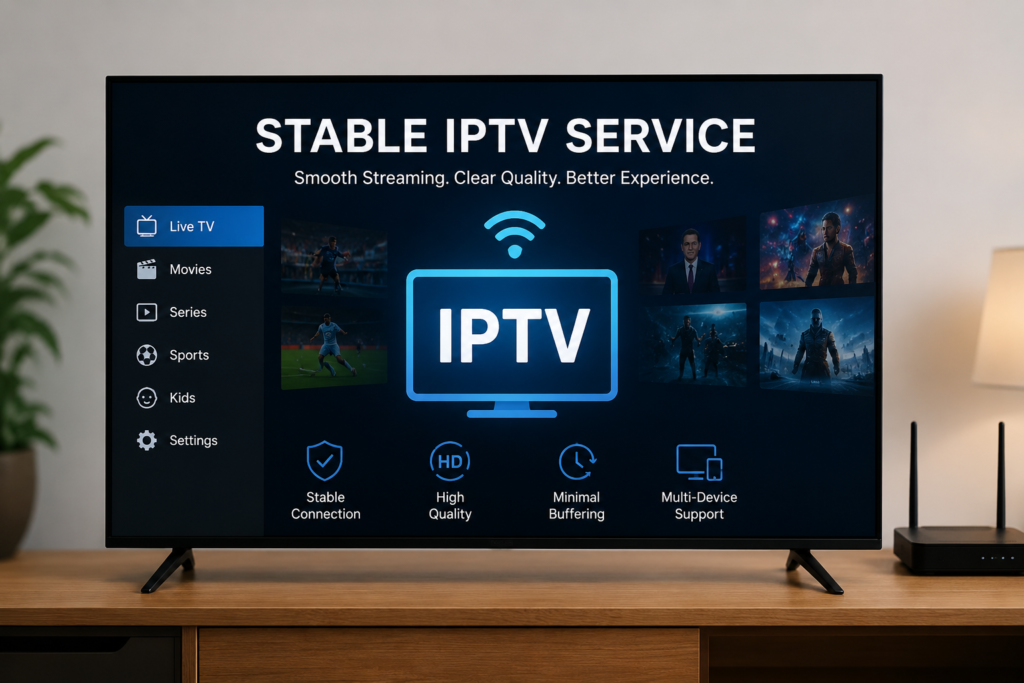
IPTV has become popular because it gives users a flexible way to watch live TV, movies, series, sports, and international content through an internet connection. However, not every IPTV service offers the same level of stability. Some services may work well during quiet hours but struggle during sports events, weekends, or peak viewing times.
That is why understanding what makes an IPTV service stable can help users make a smarter decision before subscribing.
What Is a Stable IPTV Service?
A stable IPTV service is an IPTV provider that delivers consistent streaming performance with minimal buffering, fast channel loading, reliable playlist access, and good compatibility with IPTV apps and devices.
Stability does not only depend on the provider. It can also depend on the user’s internet speed, router quality, Wi-Fi strength, device performance, and IPTV app. Still, a good provider should offer a smooth experience across common devices and apps.
A stable IPTV service should be able to handle daily viewing without frequent freezing, broken channels, login errors, or long loading times.
Why IPTV Stability Matters
IPTV stability is important because users often rely on IPTV for live content. Unlike movies or series, live TV cannot always be paused or restarted easily. If a stream freezes during a sports match, news program, or live event, the viewing experience becomes frustrating.
A stable IPTV provider helps users enjoy:
Smooth Live TV Streaming
Live TV should load quickly and play without constant interruptions. Channel switching should also feel fast and responsive.
Better Sports Viewing
Sports are one of the biggest tests of IPTV stability. Many IPTV services face heavy traffic during major events, so users should choose a provider that performs well during peak hours.
Reliable VOD Access
Movies and series should load properly inside the IPTV app. A stable VOD section should be organized, responsive, and compatible with the user’s device.
Better Device Compatibility
A stable IPTV service should work on Smart TVs, Android TV boxes, Apple TV, Amazon Fire TV devices, phones, tablets, and computers.
Main Features of a Stable IPTV Service
Before choosing any IPTV provider, users should check several important features.
1. Fast Channel Loading
A good IPTV service should load channels quickly. If every channel takes too long to open, the service may not be optimized properly.
Fast channel loading depends on:
- Server quality
- Stream source quality
- User internet speed
- IPTV app performance
- Device power
A stable IPTV service should make switching between channels feel simple and smooth.
2. Low Buffering
Buffering is one of the most common IPTV problems. It can happen because of weak internet, overloaded servers, poor routing, unstable Wi-Fi, or old devices.
A stable IPTV provider should reduce buffering as much as possible, especially for popular channels and live events.
Users can also reduce buffering by using wired Ethernet, restarting the router, clearing the app cache, testing another IPTV app, or using a better streaming device.
3. Good App Compatibility
A stable IPTV service should work with popular IPTV apps. Many users prefer apps such as IPTV Smarters, TiviMate, XCIPTV, OTT Navigator, VLC Player, IBO Player, and Smart IPTV.
App compatibility matters because the IPTV app is the interface users interact with every day. Even if the provider offers many channels, the experience can feel poor if the app is slow, outdated, or not fully compatible with the playlist format.
A good provider should support common login methods such as M3U playlist, Xtream Codes login, or portal URL setup.
4. Device Support
The best IPTV service should work on many devices. Some users watch IPTV on a Smart TV, while others prefer Android boxes, Fire TV devices, Apple TV, phones, tablets, or computers.
A stable IPTV service should support different device types so users are not locked into one platform.
Common IPTV devices include:
- Smart TVs
- Android TV boxes
- Apple TV
- Amazon Fire TV devices
- Android phones
- iPhones
- iPads
- Windows PCs
- Mac computers
5. Stable Performance During Peak Hours
Peak-hour performance is one of the most important signs of a stable IPTV service. Some providers work well during the day but buffer heavily during evenings, weekends, or major sports events.
Users should test IPTV performance during the times they actually plan to watch. Testing only during quiet hours may not show the full picture.
A stable IPTV service should perform consistently even when traffic is higher.
6. Organized Channel Categories
A stable IPTV experience is not only about playback. Organization also matters.
Good channel categories help users find what they want faster. IPTV services should organize content by country, language, category, and content type.
Useful categories may include:
- Live TV
- Sports
- Movies
- Series
- Kids
- News
- Entertainment
- International channels
- 4K channels
- VOD
Poor organization can make the service feel confusing, even if the streams are stable.
7. Reliable VOD Library
Many users choose IPTV not only for live TV but also for movies and series. A stable IPTV service should offer a VOD section that loads properly and works well inside compatible apps.
A good VOD library should be:
- Easy to browse
- Organized by category
- Compatible with IPTV apps
- Fast to load
- Updated when possible
If VOD is slow, incomplete, or difficult to use, the overall service quality may feel lower.
8. Clear Setup Instructions
A stable IPTV service should be easy to set up. Many users are not technical, so clear instructions are important.
A good IPTV provider should explain how to use:
- M3U playlist
- Xtream Codes login
- Server URL
- Portal URL
- EPG link
- Compatible IPTV apps
Clear setup instructions reduce confusion and help users start watching faster.
9. Customer Support
Customer support is a major part of IPTV stability. Even a good IPTV service may sometimes need troubleshooting.
Support can help with:
- Login details
- App setup
- Buffering issues
- Playlist refresh
- Device compatibility
- Alternative apps
- Connection problems
- VOD loading issues
A stable IPTV provider should offer helpful support when users need assistance.
Common Reasons IPTV Becomes Unstable
IPTV problems do not always come from the provider. Many factors can affect performance.
Weak Internet Connection
Slow or unstable internet can cause buffering, freezing, and poor picture quality.
Wi-Fi Problems
Wi-Fi can be unstable, especially if the router is far from the device. Ethernet is usually better for IPTV.
Old Streaming Device
Older Smart TVs or weak Android boxes may struggle with modern IPTV apps and high-quality streams.
App Cache Issues
Sometimes IPTV apps need cache clearing or playlist refreshing to work properly.
Server Overload
If the provider’s servers are overloaded, users may experience buffering during busy times.
High-Quality Streams
4K and high-bitrate streams need stronger internet and better devices than HD or Full HD streams.
How to Test IPTV Stability Before Buying
Users should not choose an IPTV service based only on a name or price. Testing is important.
Test on Your Main Device
If you plan to watch on a Smart TV, test the service on that Smart TV. If you plan to use an Android box, test it there.
Test Different Categories
Do not test only one channel. Try live TV, sports, movies, series, and international channels.
Test During Busy Hours
Evenings, weekends, and sports events are better times to check real stability.
Try More Than One App
If the service does not work well on one IPTV app, another app may perform better.
Check Support Response
Before buying a long plan, ask the provider a simple question and see how fast they respond.
What Internet Speed Is Good for Stable IPTV?
Internet speed matters, but stability is just as important as speed.
As a general guide:
- HD IPTV: around 10 Mbps or more
- Full HD IPTV: around 20–25 Mbps or more
- 4K IPTV: around 50 Mbps or more
- 8K IPTV: much higher speeds may be needed
However, a fast internet plan does not always guarantee perfect IPTV. Router quality, Wi-Fi strength, device performance, and app compatibility also matter.
Should You Choose IPTV Based on Price?
Price is important, but it should not be the only factor. A cheap IPTV service may look attractive, but if it buffers often or lacks support, it may not offer good value.
A good IPTV service should balance:
- Fair pricing
- Stable streaming
- App compatibility
- Device support
- Clear setup
- Customer support
- Content organization
The cheapest option is not always the best option.
For users comparing different IPTV plans, free trials, pricing, and provider features, this detailed guide on best IPTV providers with free trials can help explain what to check before choosing a service.
Stable IPTV Service Checklist
Before choosing an IPTV provider, users can use this simple checklist:
Streaming Stability
Does the service load channels quickly and play smoothly?
App Compatibility
Does it work with common IPTV apps?
Device Support
Does it support your Smart TV, Android box, Fire TV device, Apple TV, phone, tablet, or computer?
VOD Access
Are movies and series available and organized?
Sports Performance
Does it perform well during live sports and peak hours?
Setup Instructions
Are login details and setup steps clear?
Support Quality
Can users get help when something does not work?
Price and Value
Does the price make sense compared to stability and support?
Final Thoughts
A stable IPTV service is not only about having thousands of channels. Real quality comes from smooth streaming, fast loading, low buffering, app compatibility, device support, clear setup instructions, and helpful customer support.
Users should always compare IPTV providers carefully before choosing a subscription. The best IPTV service is the one that works reliably on the user’s device, supports the preferred IPTV app, offers useful content categories, and provides a smooth viewing experience during both normal and busy hours.
Before buying, users should test the service when possible, compare features, check support quality, and avoid choosing based only on price or channel count.